
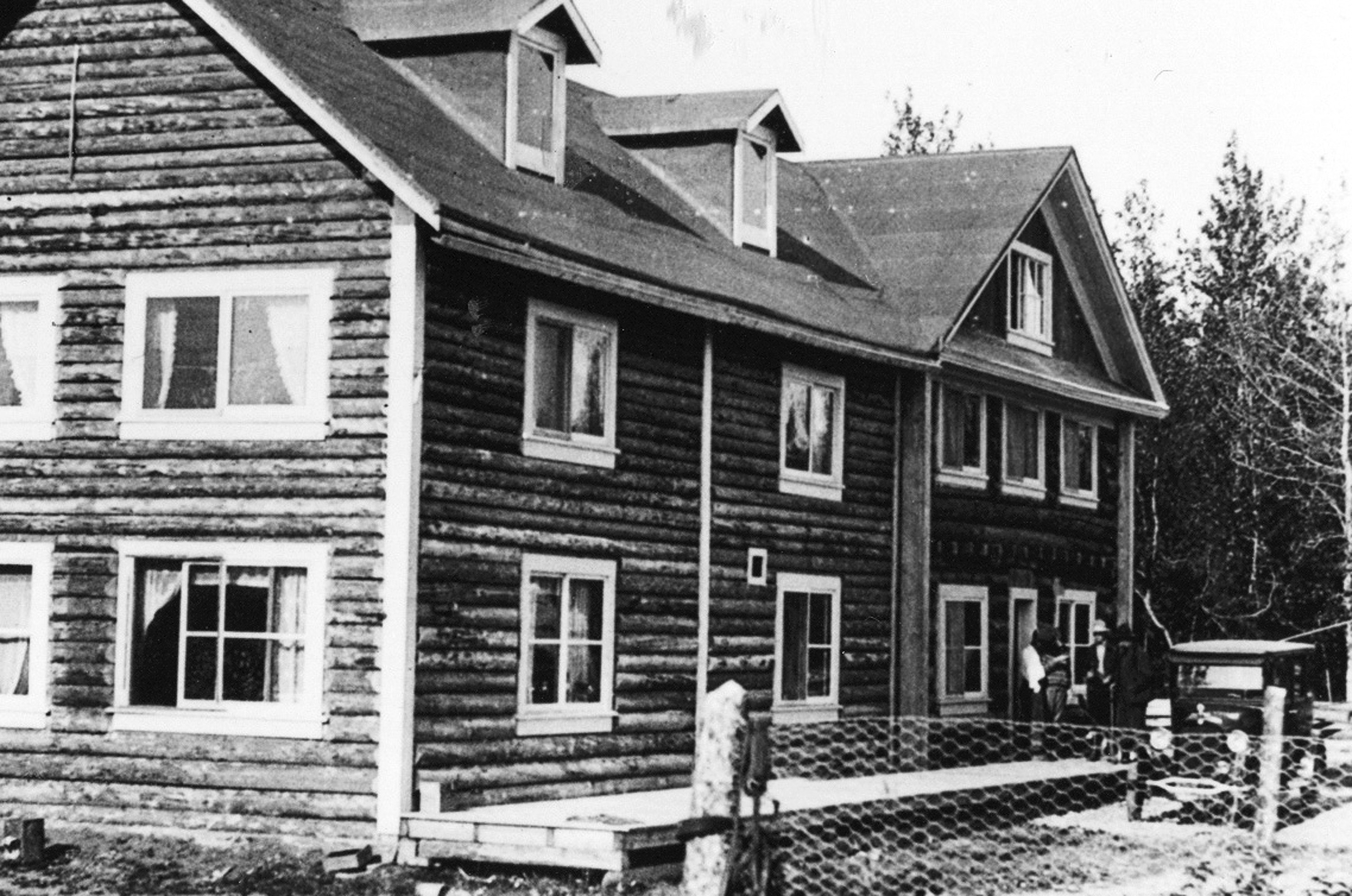
Before the waves of gold rushes, rivers, moose trails, and indigenous paths were the only means of travel in interior Alaska. The1896 Klondike gold strike set off more stampedes, leading Congress to fund the Washington-Alaska Military Cable and Telegraph System (WAMCATS) in 1900. Forts were established on the southern coast including Fort Egbert, close to the village of Eagle and upstream from the confluence of the Delta and Tanana rivers. The Army Signal Corps also established a reservation. Near the tents and cabins of that early telegraph system in Big Delta, the first prospectors’ depot was Bennett’s Cache which supplied stampeders on their way to Felix Pedro’s strike in current-day Fairbanks. Bennett’s offered the traveler food and a roof overhead. When Bill Bennett moved on, the roadhouse responsibilities were handed off to Dan McCarty. Shortly thereafter, Big Delta homesteader Al Maxey took over McCarty’s roadhouse. (Fifty years later, testifying in Pinkerton v Yates in the Fairbanks District Court in 1962, Montenegrin prospector John Hajdukovich said that in 1913 he bought Maxey’s, aka Bennett’s/McCarty’s.) That year, 1913 marked the last of the great international gold strikes, the Chisana, north of today’s Northway. Hajdukovich, the new owner of Maxey’s, aka McCarty/Bennett’s, realized the need for a much bigger roadhouse. Hajdukovich approached Charles Maxfield and Ted Smith, who constructed the Clearwater Creek roadhouse, to build a two-story building near the Tanana River. This would later become Rika’s Roadhouse.
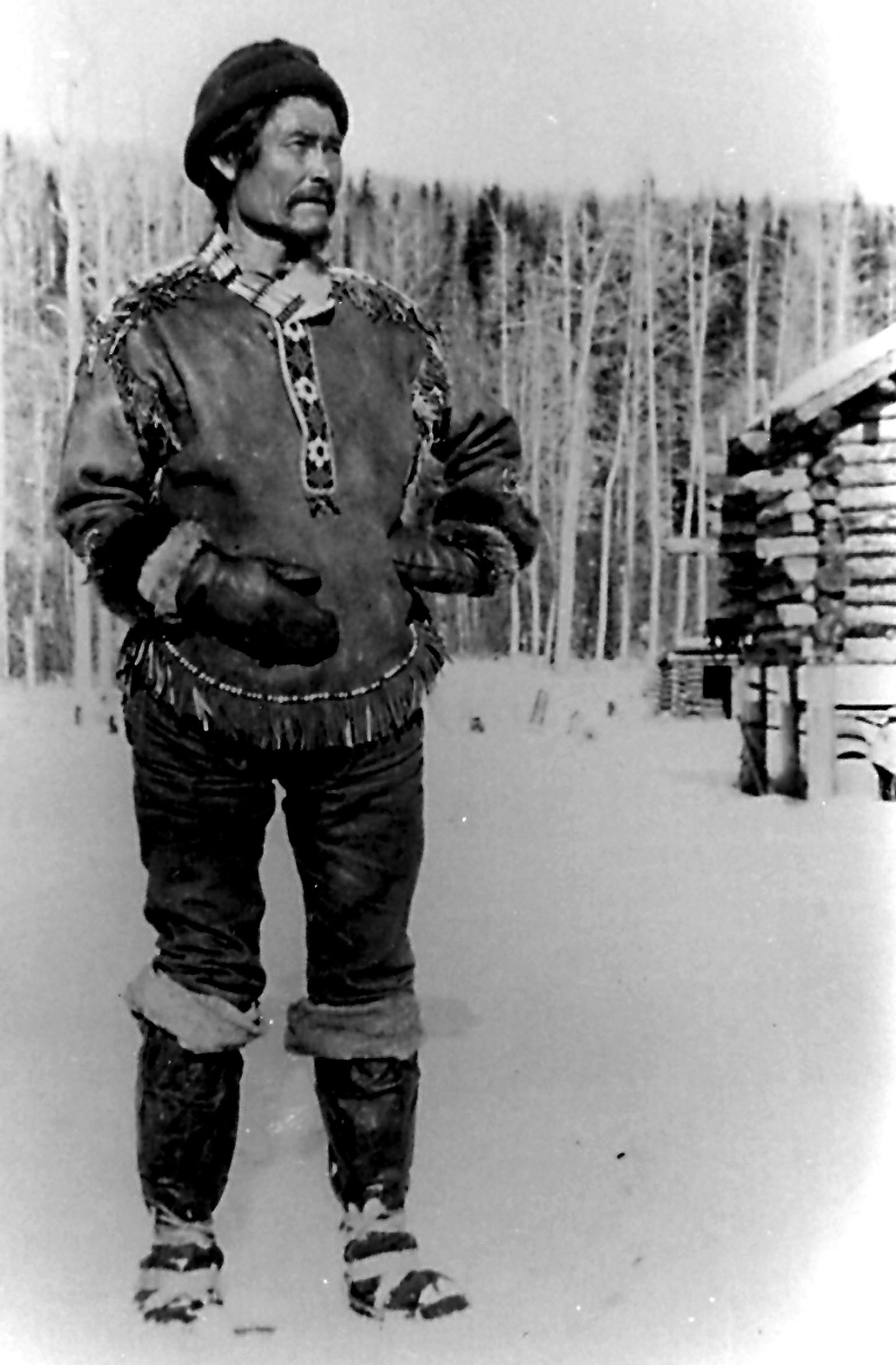
Two years later, Swedish-born Lovisa Erika “Rika” Jakobsson arrived in Alaska and began working at a Fairbanks bakery. Hajdukovich recruited her to cook and manage his new roadhouse in Big Delta. Shortly thereafter, Rika began converting the Roadhouse into a magnet that not only attracted Fairbanks travelers, but Hajdukovich’s wealthy East Coast big game hunters. Rika became a stake in the ground serving travelers and providing Hajdukovich with a base, which left him free to prospect and to develop his fur trade as well as becoming a notable big game guide. But he owed Rika some back wages, so in 1918 signed the roadhouse over to her.
The primitive Richardson Highway used ferries to cross the many creeks and rivers between Valdez and Fairbanks. One such ferry was at Rika’s Roadhouse. The bachelors in the Big Delta community helped Rika operate the infrastructure. Louis Grimsmore covered construction and repairs, while Teddy Goring was in charge of the Big Delta ferry.
Rika became the first Big Delta postmistress. She was a farmer and a rancher of cattle, goats, and chickens, which provided food for the travelers of the early Richardson Highway. Ten years later, in 1928, Rika filed on her 320-acre homestead and added an additional wing onto the roadhouse. Hajdukovich became a U.S. Commissioner and a contributor to the federal designation of the Tetlin Refuge. In 1928, he was instrumental in the importation of Big Delta’s bison population. Rika worked like a man but became a mother to the growing Big Delta community, which grew up around the US Army WAMCATS signal corps military reservation. John’s trading posts included the village of Mansfield soon to transition to Tanana-Crossing, as well as at Healy Lake, Tetlin, and Northway. For 50 years, John and Rika were parents to the first community of Big Delta.
World War II brought dramatic changes to the Alaska Interior. In 1942, the Alaska Highway was constructed, bridges replaced many of the old river ferries, and a series of “Lend-Lease” airfields were built across Alaska. With the Interior connected to the Lower 48, homesteaders began arriving and communities along the highway grew. But progress also brought change.
During the 1950s, the highway was rerouted away from Rika’s Roadhouse and from Bert and Mary’s roadhouse on the north bank of the river, opposite Rika’s. As people aged and transportation routes changed, the roadhouses that had once provided indispensable shelter and services to travelers were no longer located along the main highway. Gradually, they began to deteriorate.
When the Richardson Highway was paved in 1957, the community of Big Delta began shifting south to what would become Delta Junction, approximately eight miles away on military property. The area was initially associated with the Big Delta Army Airfield and was also known as Buffalo Center, reflecting its location at the junction of the Alaska and Richardson highways. In 1960, the City of Delta Junction incorporated.
Back in Big Delta, John Hajdukovich died in 1965, followed by Rika in 1969.
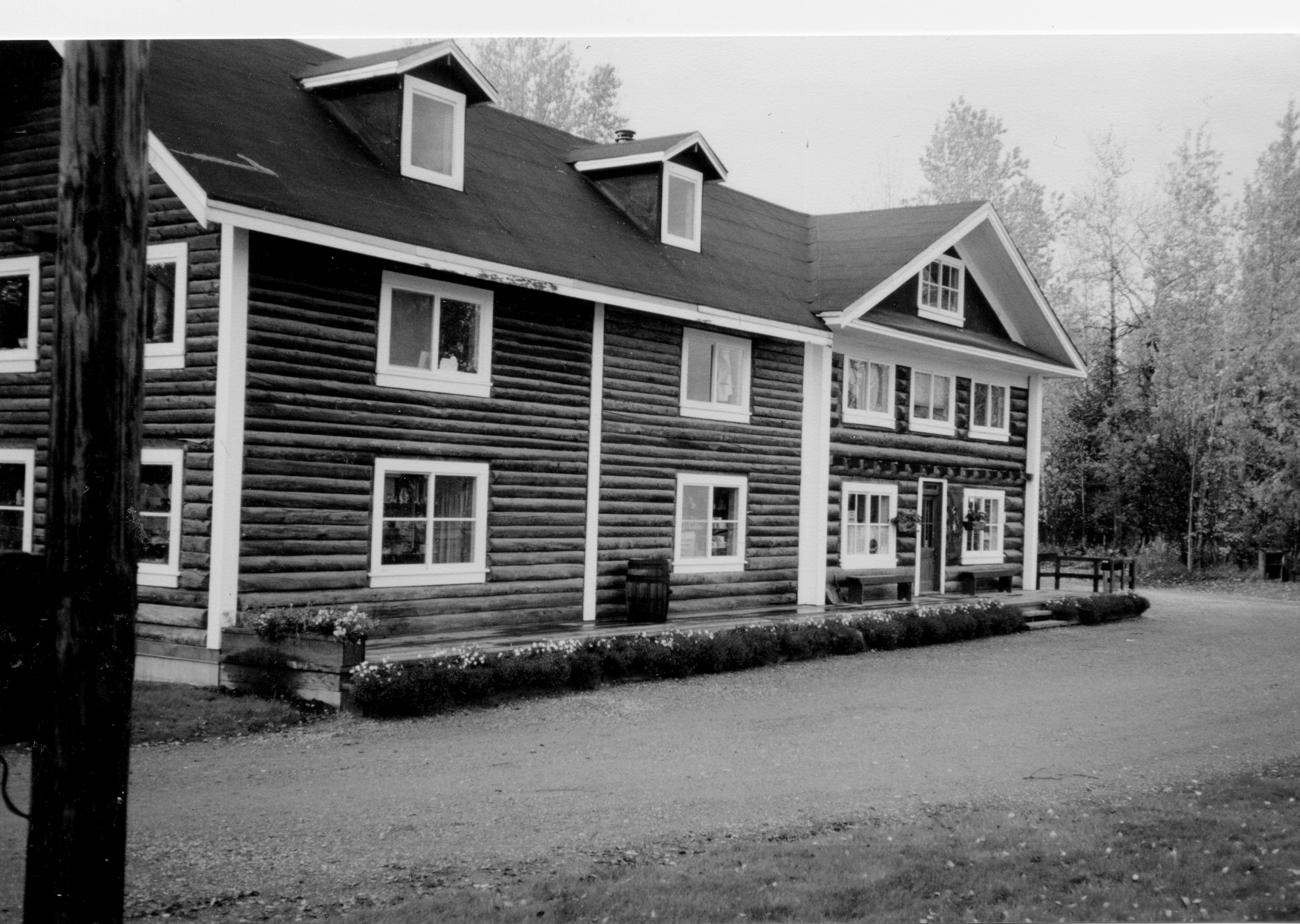
During the pipeline boom of the mid-1970s, Rika’s Roadhouse was repeatedly vandalized, and squatters moved into the historic building. Irene Hansen Mead, daughter of Bert and Mary, became a tireless advocate for preserving the roadhouse and what it represented.
Mead helped form what is now the Delta Historical Society. Along with the society and Friends of Rika’s, a dedicated volunteer and community support group, she worked to protect the historic property. In 1976, Rika’s Roadhouse was placed on the National Register of Historic Places, where it is listed as building No. 76000364.
In 1982 and 1983, the State of Alaska invested approximately $1 million in the property – a significant investment at the time and one that represented enormous potential for the community. That investment helped preserve and develop the historic site for future generations.
By the late 1980s, the state had entered into an agreement with Whitestone Farms to operate the concession at the state park surrounding Rika’s. Whitestone subsequently entered into contracts with Holland America and other bus-tour operators. For 25 years, Whitestone Farms operated Rika’s as a thriving destination. Daily meals were served, personable tours introduced visitors to the site’s history, and Rika’s Roadhouse, the WAMCATS buildings, restaurant and kitchen pavilion were maintained and operated as a working historical attraction.
Then, in 2013, Holland America cancelled its contract with Whitestone Farms.The contract represented approximately 65 percent of Whitestone’s business at Rika’s. Without that major source of visitors, continuing the operation was no longer financially possible.
Since then, various concessions have operated at the park. However, the Delta Historical Society says the state has not invested in the property at a level sufficient to prevent continued deterioration.
In 2025, Rika lost another of her most dedicated advocates with the passing of Emma Irene Hansen Mead.
Today, the historic roadhouse stands as a reminder of Delta Junction’s past – but one in need of attention. The Delta Historical Society is asking the community to help ensure that Rika’s Roadhouse does not become simply a monument to what once was. The society is asking Delta residents to become members, volunteer their talents, help develop the park grounds and gardens, and contact state legislators to request dedicated funding to prevent further deterioration of the historic property.
The society sees Rika’s not only as an important piece of Delta’s history, but as an opportunity for the community’s future. The 113-year-old building and surrounding park remain capable of hosting vendors, weddings, celebrations, and other community events.
The goal is to see Rika’s Roadhouse become active once again – a place where history is preserved, visitors are welcomed, and the community can gather.
In the words of those working to preserve it, Rika’s has lost many of the people who once cared for her. Now, the Delta community is being asked to step in.
The Delta Historical Society may be contacted through Gigi Lemoine at rnlemoine@gmail.com, Judy Ferguson at outpost99737@gmail.com, Mo Gardner at morich.gardner2@gmail.com, or Mary Leith at territorialgirl54@gmail.com.
The society meets at 6 p.m. on the second Thursday of every other month at Pizza Bella. The next meeting is scheduled for Nov. 19.
Judy Ferguson is a fifty-eight-year resident of Big Delta and the author of “Parallel Destinies, An Alaskan Odyssey,” as well as nine other titles found at: judysoutpost.com.



From breaking news to thought-provoking opinion pieces, our newspaper keeps you informed and engaged with what matters most. Subscribe today and join our community of readers staying ahead of the curve.


From breaking news to thought-provoking opinion pieces, our newsletter keeps you informed & engaged.